
Is It Safe to Fix a Garage Door Yourself?
Some garage door maintenance is safe to DIY — lubricating rollers and tracks, tight-ening visible hardware, and cleaning sensor lenses. Spring and cable work is not safe to DIY under any circumstances; torsion and extension springs store enough tension to cause serious injury or death if released incorrectly, which is why profes-sional technicians use specialized winding bars rather than improvised tools.
What’s Genuinely Safe to Do Yourself
What You Should Never Attempt Yourself
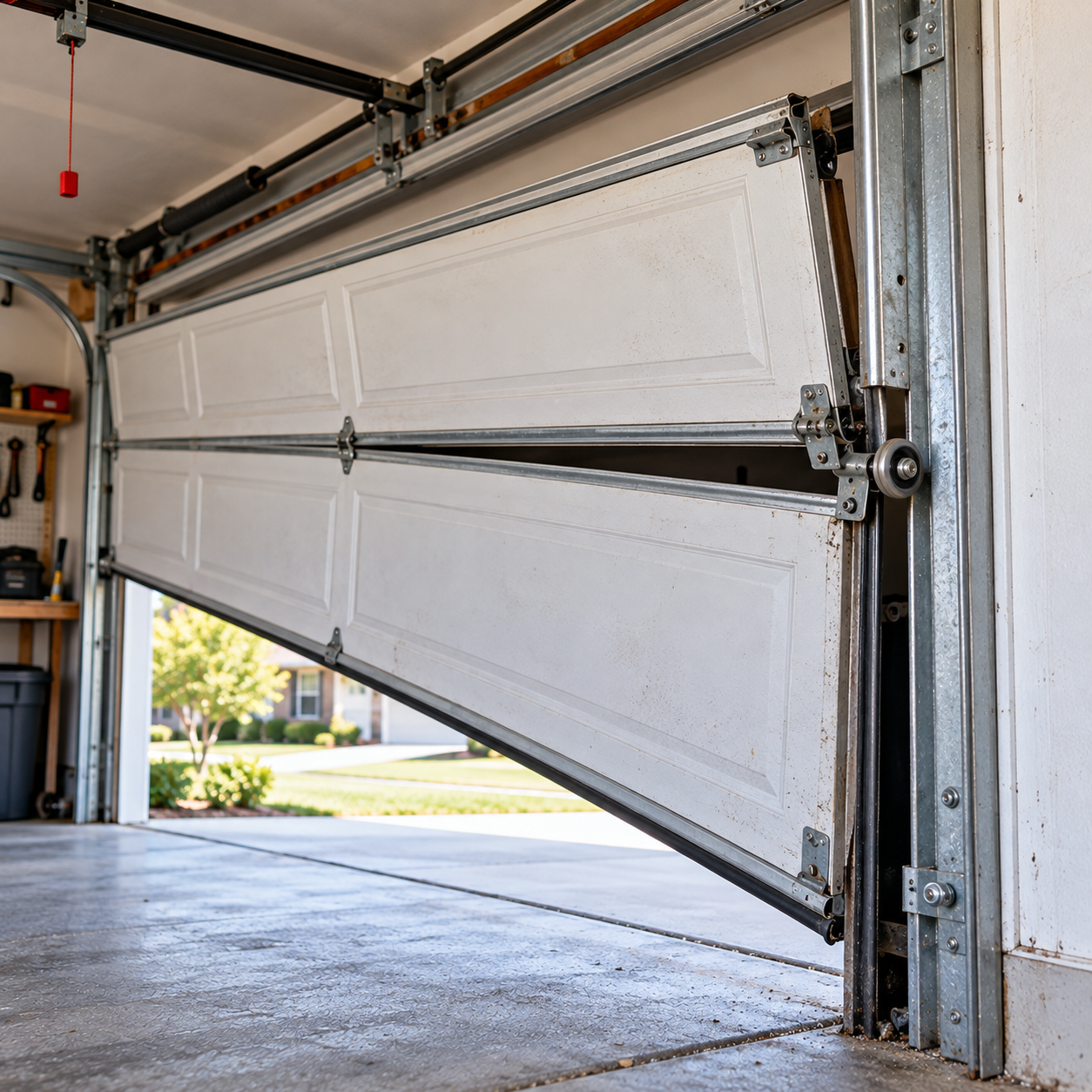
Spring replacement or adjustment. This is the big one. A torsion spring stores enough energy, under tension, to cause blindness, broken bones, or worse if a winding bar slips or the wrong tool is used. Professional technicians use purpose-built winding bars — never screw-drivers or improvised tools — specifically because the margin for error is that unforgiving. Cable repair. Cables work under the same tension system as springs. Releasing or resetting them without the right process and tools carries similar risk. Working underneath a door held open by a failing spring system. If a door is stuck partially open and you suspect a spring or cable issue, don’t go under it or try to force it further — treat it as unstable until it’s inspected.
A Word From the Field
We’ve heard the same story more than once: a homeowner tries the DIY spring fix after watching an online tutorial, gets thirty quarter-turns of tension wound onto a bar, and the bar slips. It’s genuinely one of the more dangerous jobs a homeowner can attempt around the house — more so than most people realize going in, because a fully wound torsion spring can release with enough force to seriously hurt someone standing anywhere near its swing path.
When to Call a Professional
If the issue involves springs, cables, the door being significantly out of balance, or anything that requires releasing stored tension — call a professional. If it’s lubrication, cleaning, or basic hardware tightening — that’s reasonably safe DIY territory. When in doubt, a quick call for advice costs nothing; a wrong guess with a torsion spring can cost a lot more than a repair bill.

Frequently Asked Questions
Can a garage door spring kill you?
Is it worth trying to fix a garage door yourself?
What tools do professionals use for spring replacement that homeowners shouldn’t substitute?
Ready to Fix Your Garage Door?
Get fast, honest garage door repair in Wheaton, IL. From broken springs and cables to opener problems and off-track doors, our local team is ready to help. Call today for a free, honest estimate.